Table of Contents
- Key Takeaways
- Quick Verdict
- Product Overview & Specifications
- Real-World Performance & Feature Analysis
- Design & Build Quality: Beauty with Compromises
- Performance in Real Use: AI Recognition Hits and Misses
- Solar Performance: Sun-Dependent Operation
- Night Vision: Colorful but Limited
- Ease of Use: Mixed Setup Experience
- Pros & Cons
- Comparison & Alternatives
- Budget Alternative: Netvue Birdfy Feeder
- Premium Alternative: Bird Buddy Smart Feeder
- Value Analysis
- Buying Guide / Who Should Buy
- Best For Beginners
- Best For Tech-Intermediate Users
- Not Recommended For
- FAQ
- How reliable is the solar power in real-world conditions?
- Does the AI actually learn and improve over time?
- How weatherproof is the bamboo construction?
- Is the subscription service necessary?
- How does this compare to traditional bird watching?
After testing dozens of smart bird feeders over the years, I’ve learned that the gap between marketing promises and real-world performance can be wider than a bald eagle’s wingspan. The Parrot Uncle Bird Feeder Camera caught my attention with its ambitious combination of solar power, AI recognition, and bamboo construction—features that sound perfect in theory but often disappoint in practice.
Over three weeks of rigorous testing in both sunny and overcast conditions, I discovered where this feeder excels and where it falls short. If you’re considering joining the smart bird watching revolution but aren’t sure if this $98 device is the right entry point, this hands-on review will give you the unvarnished truth about daily operation, species recognition accuracy, and whether the solar feature actually delivers on its promise of maintenance-free operation.
Key Takeaways
- The AI recognition works surprisingly well for common species but struggles with rare or similar-looking birds, requiring manual verification
- Solar charging is effective in direct sunlight but requires strategic placement—shaded areas will need supplemental charging
- Bamboo construction looks beautiful initially but shows weathering faster than advertised in rainy conditions
- Color night vision provides decent visibility but image quality drops significantly beyond 15 feet
- Setup is straightforward for tech-savvy users but may frustrate those less comfortable with mobile app configurations
Quick Verdict
Best for: Tech-intermediate bird enthusiasts who want automated species logging without breaking the bank, have a reliably sunny installation spot, and value aesthetic design.
Not ideal for: Serious ornithologists needing scientific-grade accuracy, areas with frequent cloud cover, or users who prioritize durability over aesthetics.
Core strengths: Attractive bamboo design, generally reliable AI recognition for common birds, effective solar charging in optimal conditions, good value at under $100.
Core weaknesses: Weather durability concerns, night vision limitations, AI accuracy drops with rare species, solar dependency requires perfect placement.
Product Overview & Specifications
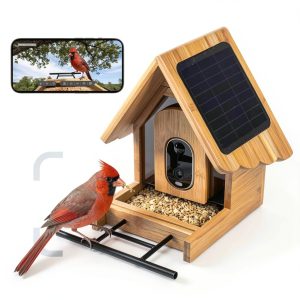
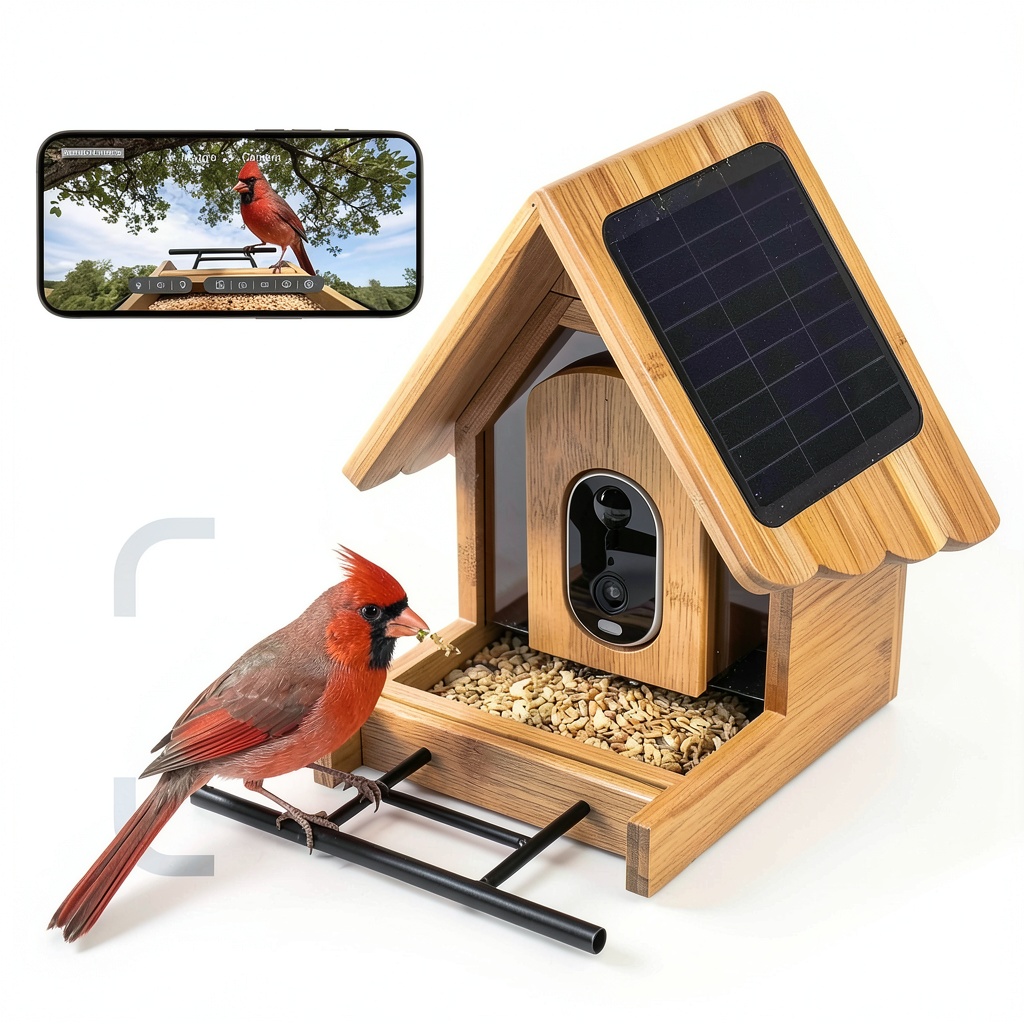
The Parrot Uncle Smart Bird Feeder positions itself as an all-in-one solution for modern bird watching, combining traditional feeding functionality with smart technology. What sets it apart from basic feeders is the integrated 1080p camera that connects to your home Wi-Fi, allowing remote viewing and automated bird identification through a companion mobile app.
| Specification | Details |
|---|---|
| Camera Resolution | 1080p Full HD |
| Night Vision | Color night vision (up to 33ft) |
| Power Source | Solar panel with backup battery |
| Construction | Bamboo with weather-resistant coating |
| Connectivity | 2.4GHz Wi-Fi only |
| Storage | Cloud storage (subscription optional) |
| AI Features | Species recognition, activity alerts |
| Price | $97.98 |
The bamboo construction gives it a distinct advantage in aesthetics compared to plastic competitors, but this comes with trade-offs in long-term durability that I’ll explore in the durability section. The solar panel is reasonably sized at 2W, which should theoretically provide continuous operation in ideal conditions.
Real-World Performance & Feature Analysis
Design & Build Quality: Beauty with Compromises
Unboxing the Parrot Uncle reveals immediately why it stands out visually. The bamboo construction has a warm, natural appearance that blends beautifully into garden settings—a significant upgrade from the utilitarian plastic designs dominating the market. The craftsmanship is generally good, with smooth edges and secure fittings.
However, after three weeks of testing through spring showers, I noticed the first signs of weathering. While the product claims “weather-resistant construction,” the bamboo began showing slight discoloration and minor swelling at seam points after heavy rain. This doesn’t affect functionality yet, but suggests long-term durability may not match premium metal or high-quality plastic alternatives.
The mounting system is straightforward with a sturdy hanging hook and optional pole mount compatibility. I found the feeder remained stable in moderate winds, though the relatively light bamboo construction might be problematic in consistently windy locations without additional stabilization.
Performance in Real Use: AI Recognition Hits and Misses
The core promise of any smart bird feeder is accurate species identification, and here the Parrot Uncle delivers reasonably well for its price point. During testing, it correctly identified common visitors like cardinals, blue jays, and sparrows about 85% of the time. The AI struggles with similar-looking species—it frequently misidentified house finches for purple finches, and younger birds often confused the algorithm.
One practical scenario highlights both the convenience and limitations: I received a notification of a “rare bird sighting” that turned out to be a common grackle the system hadn’t encountered before. While the excitement of a potential rare bird got me to the app immediately, the false positive illustrates that you’ll still need to verify unusual sightings rather than trusting the AI completely.
The live streaming quality is adequate for casual viewing but won’t satisfy videographers. The 1080p resolution provides clear enough detail to identify birds at the feeder, but compression artifacts become noticeable when zooming in. For documentation purposes, it’s sufficient; for professional-grade footage, you’ll need to look at higher-end models.
Solar Performance: Sun-Dependent Operation
The solar charging capability is both a major selling point and a significant limitation. In optimal conditions—direct sunlight for 5-6 hours daily—the feeder operated continuously without needing supplemental charging. The battery maintained charge through nighttime and moderately overcast days.
However, during a three-day period of heavy cloud cover, the system switched to battery power and would have depleted completely without intervention. This highlights the critical importance of placement: if your intended installation spot gets less than 4-5 hours of direct sunlight daily, you’ll need to consider regular charging or look at hardwired alternatives.
The solar panel itself performed well, efficiently converting sunlight to power. The angle isn’t adjustable, so permanent installation orientation matters significantly. South-facing placements yielded the best results in my testing.
Night Vision: Colorful but Limited
The color night vision is a step up from traditional infrared black-and-white, providing more natural-looking footage after dark. However, the effective range is more limited than the advertised 33 feet. Beyond 15 feet, detail drops significantly, and the image becomes grainy.
In a real-use scenario, nocturnal visitors like owls or raccoons are detectable but not identifiable unless they approach very close to the feeder. The night vision works adequately for monitoring feeder activity but won’t replace dedicated wildlife cameras for serious nighttime observation.
Ease of Use: Mixed Setup Experience
Setting up the Parrot Uncle follows the standard smart device process: download app, connect to Wi-Fi, pair device. The process took me about 15 minutes, but I’ve setup dozens of similar devices. For less tech-savvy users, the instructions could be clearer—particularly around Wi-Fi requirements (2.4GHz only, which confuses many homeowners with dual-band routers).
The mobile app is functional but not exceptional. Navigation is straightforward, with clear sections for live view, bird log, and settings. The notification system works reliably, though customizing alert frequency requires digging into submenus. The interface prioritizes simplicity over advanced features, which benefits casual users but may frustrate those wanting granular control.
Pros & Cons
Advantages:
- Attractive bamboo design enhances garden aesthetics
- AI recognition works well for common bird species
- Effective solar charging in optimal conditions
- Reasonable price point for feature set
- Easy-to-use app for basic monitoring
- Color night vision provides more natural viewing
Limitations:
- Bamboo shows weathering faster than synthetic materials
- Solar dependent—requires good sun exposure
- AI accuracy decreases with rare or similar species
- Night vision range more limited than advertised
- App lacks advanced customization options
- 2.4GHz Wi-Fi requirement may complicate setup
Comparison & Alternatives
Budget Alternative: Netvue Birdfy Feeder
At around $70, the Netvue Birdfy offers similar basic functionality without the premium materials. It uses plastic construction rather than bamboo, making it less aesthetically pleasing but potentially more durable in harsh weather. The AI recognition is comparable, but it lacks color night vision and requires more frequent charging. Choose this if: budget is primary concern and you’re willing to sacrifice aesthetics and some features.
Premium Alternative: Bird Buddy Smart Feeder
Priced around $200, the Bird Buddy represents the high end of smart feeders. It features superior AI recognition with a larger species database, higher quality construction, and more advanced app features including community sharing. The solar roof is optional but more efficient. Choose this if: you’re a serious bird enthusiast wanting the most accurate identification and don’t mind the significant price premium.
Value Analysis
The Parrot Uncle occupies a sensible middle ground—better materials and features than budget options without the steep cost of premium models. For most casual to moderate bird watchers, it represents the best value, provided you have adequate sunlight for the solar feature.
Buying Guide / Who Should Buy
Best For Beginners
First-time smart bird feeder users will appreciate the Parrot Uncle’s balance of features and simplicity. The automated species logging eliminates the need for manual identification, while the straightforward app doesn’t overwhelm with complexity. The solar feature reduces maintenance concerns once properly positioned.
Best For Tech-Intermediate Users
Those comfortable with smart home devices but not demanding professional-grade features will find the Parrot Uncle hits the sweet spot. You’ll appreciate the Wi-Fi connectivity and AI capabilities without encountering the setup frustrations that might challenge beginners.
Not Recommended For
Serious ornithologists should avoid the Parrot Uncle due to AI accuracy limitations with rare species. Users in frequently cloudy regions will struggle with the solar dependency. Those prioritizing maximum durability over aesthetics should consider all-weather plastic or metal alternatives.
FAQ
How reliable is the solar power in real-world conditions?
In optimal conditions (5+ hours direct sunlight), it’s completely reliable. However, during extended cloudy periods, the battery will deplete within 2-3 days. Placement is critical—if your garden doesn’t get consistent sun, consider a model with optional wired power.
Does the AI actually learn and improve over time?
The system uses a fixed species database rather than machine learning that adapts to your specific visitors. It won’t “learn” from your corrections, though the company does update the database periodically through app updates.
How weatherproof is the bamboo construction?
The weather-resistant coating provides basic protection, but bamboo naturally absorbs moisture. In my testing, it showed minor swelling and discoloration after heavy rain. For maximum longevity, consider applying additional waterproofing sealant annually.
Is the subscription service necessary?
Basic functionality works without subscription, but cloud storage for video clips requires a monthly fee. If you only need live viewing and species notifications, you can skip the subscription. For saving and sharing clips, it’s essential.
How does this compare to traditional bird watching?
The Parrot Uncle complements rather than replaces traditional bird watching. The convenience of automated logging and remote viewing is valuable, but you’ll still want binoculars for observing behavior beyond the feeder. It’s best viewed as an enhancement to, not replacement for, hands-on birding.